If light wakes you up (streetlights, sunrise, neighbor’s porch light), curtains can make a bigger difference than people expect. But “blackout” and “room-darkening” aren’t the same—and the best choice depends on how sensitive you are to light and how your room is set up.
The Real Difference
Blackout Curtains
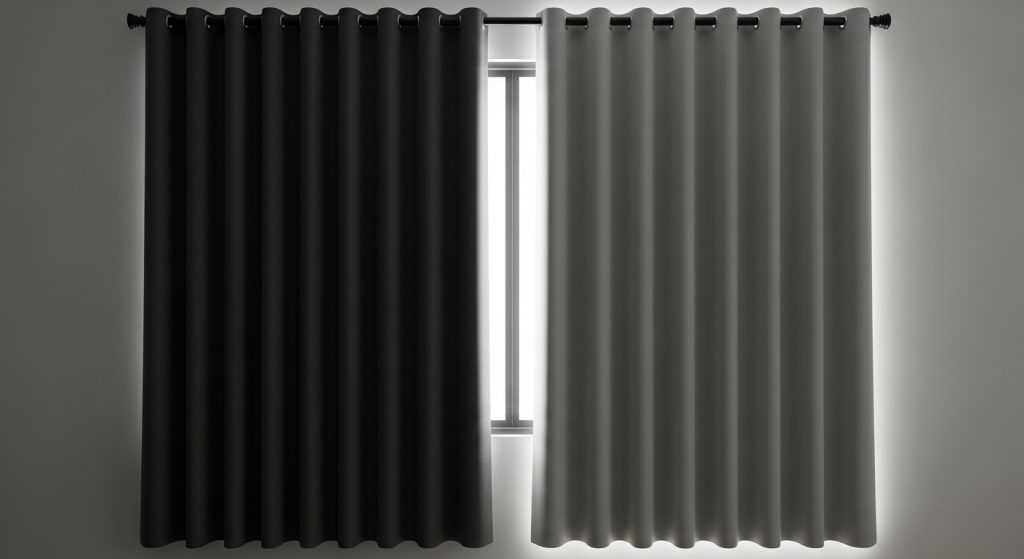
Designed to block almost all light when installed correctly. Usually made with a dense lining or multi-layer fabric.
Room-Darkening Curtains
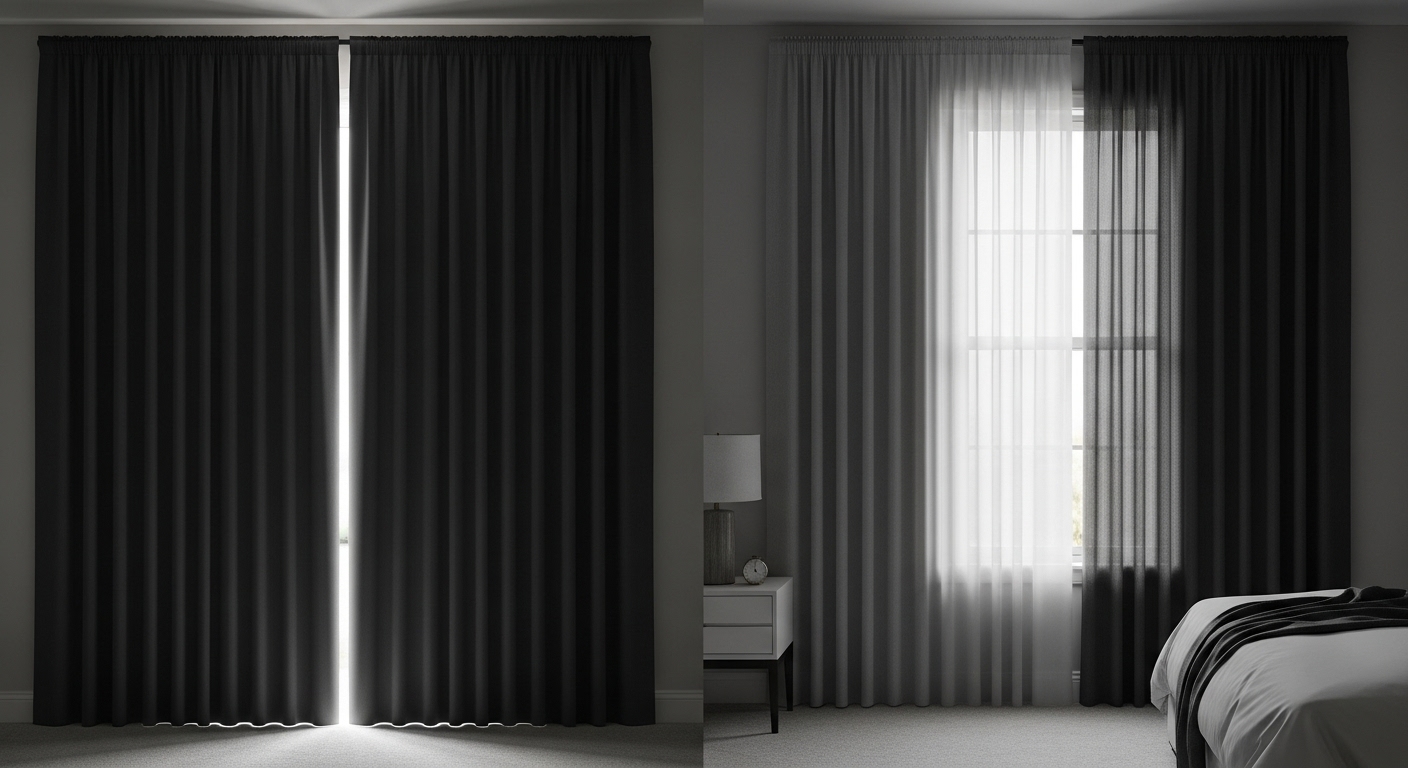
Designed to reduce light significantly, but they typically still let some glow through—especially around edges.
The key truth: Most “light leaks” come from the sides/top of the curtain, not the fabric itself. Installation matters as much as the curtain type.
Why Light Affects Sleep (In Plain English)
Light—especially bright morning light and blue-ish outdoor lighting—can tell your brain it’s time to be awake. For people who are light-sensitive, even a small glow can lead to:
- waking up earlier than desired
- lighter, more fragmented sleep
- harder time falling back asleep
Blackout Curtains: Pros & Cons
Pros
- Best for staying asleep if early light wakes you up
- Great for shift workers sleeping during the day
- Helpful for nurseries/kids’ rooms (naps + early bedtimes)
- Often improves comfort by helping with temperature control (less heat/cold transfer)
Cons
- Can make mornings harder if you need light to wake up
- If not installed well, you may still get edge leaks, which feels frustrating because you “paid for blackout”
- Some blackout fabrics feel heavier or less “airy,” which not everyone likes visually
Best for: very light-sensitive sleepers, city bedrooms, daytime sleepers, nurseries.
Room-Darkening Curtains: Pros & Cons
Pros
- Usually enough for people who just want a cozier, dimmer bedroom
- Feels more “natural” in the morning (you’ll still get gentle light)
- Often lighter-looking and easier to style in a bright, decorative room
- Can be a better balance if you don’t want a cave
Cons
- If you’re light-sensitive, you may still wake up at sunrise
- Streetlights and car headlights may still glow through
- You may end up layering later (sheers + darker curtains), which can cost time/effort
Best for: mild light control, people who like waking with natural light, living rooms/guest rooms.
Head-to-Head: What Actually Helps You Sleep Better?
If you wake up too early from sunlight
✅ Blackout (plus better install) usually helps most.
If you struggle to fall asleep because the room feels “bright”
✅ Either can help, but blackout tends to create faster “sleep cues” if your room is very bright at night.
If you wake up from headlights or streetlights at night
✅ Blackout is the safer bet—room-darkening often isn’t enough.
If you feel groggy in the morning
✅ Room-darkening may be better, or use blackout with a plan (open them at the same time daily).
The Most Important Part: Installation (This Is Where People Win or Lose)
If you do one thing, do this:
To get true blackout performance:
- Use a wraparound/curved curtain rod (brings curtain closer to the wall)
- Choose panels with extra width so they stay folded/overlapped
- Hang the rod higher and wider than the window (covers the frame)
- Ensure the center panels overlap (no middle gap)
- If you’re very sensitive: consider side channels or a top valance
Room-darkening curtains can perform way better with these same steps too.
Best Choice by Situation
- Apartment bedroom with streetlights: Blackout
- Light sleeper / insomnia tendencies: Blackout
- Shift work / daytime sleep: Blackout
- You like sunrise wake-ups: Room-darkening
- Guest room: Room-darkening
- Nursery / toddler naps: Blackout
The Best Overall Answer
If your goal is sleeping better (not just “making the room a bit dim”), blackout curtains are usually the optimal choice—but only if you install them to prevent edge light leaks.
If you don’t wake easily from light and you prefer a brighter, more natural morning, room-darkening is the better everyday balance.